


Construction sites are often busy places with heavy machinery, vehicle movement, and constant activity. Amidst all this, existing trees are at serious risk of damage if not properly protected. In Australia, councils and builders increasingly require the use of a tree protection zone (TPZ) to safeguard valuable trees during development. By fencing off this area, builders can ensure compliance with regulations while also helping to preserve the environmental value of the tree.
The most effective way to establish this barrier is with temporary fencing. Easy to install, durable, and adaptable, temporary fencing is the preferred method for defining TPZs on construction sites across the country.
What is a tree protection zone?
A tree protection zone is a designated area around a tree that must remain undisturbed during construction. This zone acts as a buffer, ensuring that site activities do not harm the tree’s roots, trunk, and branches. By preventing direct and indirect interference, TPZs give trees the best chance of survival even when heavy construction is taking place nearby.
The main objective of a TPZ is to preserve the long-term health and stability of trees. When established properly, it ensures that both the visible parts of the tree and the root system are protected. Without a TPZ, construction sites risk tree decline, structural failure, and costly penalties for breaching council requirements.
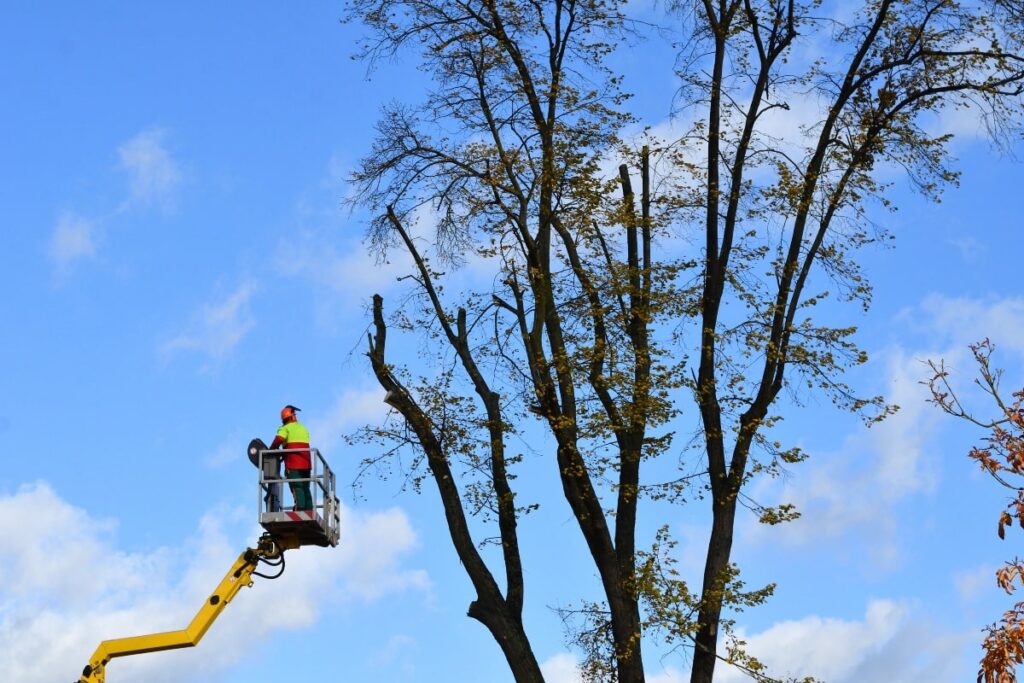
Components of a tree protection zone
A TPZ protects more than just the tree trunk. It includes:
Trunk and diameter
- The trunk’s width determines the protection radius.
- Larger trunks require more space due to bigger root systems.
Structural root zone
- Protects the primary support roots that anchor the tree.
- Prevents destabilisation and premature decline.
Crown area and canopy
- Safeguards overhanging branches that provide energy and balance.
- Prevents loss of shade and ensures the tree’s long-term survival.
Protecting trees during construction
Across Australia, tree protection is a strict requirement during development. Councils regularly mandate the installation of TPZs, particularly around street and verge trees located on public land. These verge trees are often mature and valuable assets, meaning builders must take extra care to avoid damaging them.
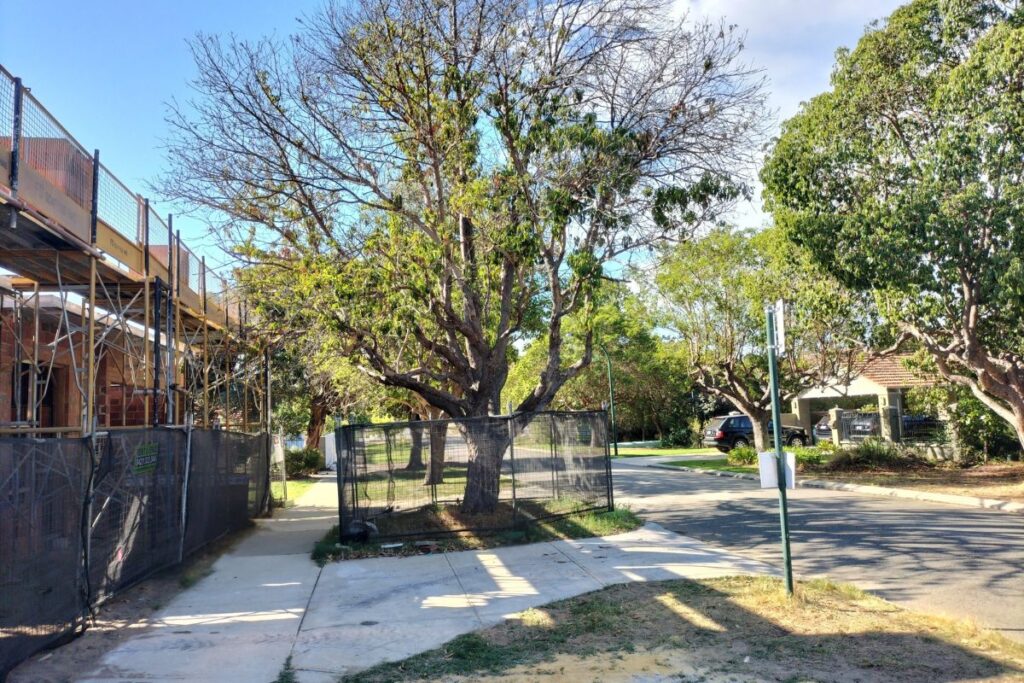
Fencing is the most practical and widely used method to establish these exclusion zones. Once installed, a TPZ creates a visible boundary that signals to workers and contractors that no activities should occur inside the fenced-off area.
Prohibited activities within a tree protection zone
- Excavation that may disturb root systems.
- Machinery movement that causes soil damage.
- Soil compaction caused by vehicles or foot traffic.
- Storage of materials or waste, which restricts water and air penetration.
- Vehicle parking that puts unnecessary pressure on the roots.
- Mixing or washing of building products, which can contaminate soil and poison trees.
By following these rules for protecting trees, builders avoid fines, project delays, and tree loss.
Why fencing is essential for a tree protection zone
Fencing plays a crucial role in enforcing a TPZ. Without a physical barrier, workers and machinery operators may unintentionally encroach on the zone, damaging roots or compacting soil.
Moreover, fencing creates a visible boundary that clearly communicates the restricted area. This not only prevents accidental access but also reduces the likelihood of deliberate damage.
Additionally, fencing reduces the risk of soil compaction, which is a serious threat. Compacted soil limits air and water access to the roots, eventually causing poor tree health or decline.
Tree protection zone fencing requirements
The most common and effective solution for tree protection zones is temporary construction site fencing. Unlike permanent structures, temporary fencing can be installed quickly, adjusted for different tree sizes, and removed once construction is finished.
A tree protection fence should meet key criteria.
- Durable and stable: It must withstand site activity, weather, and external pressure without collapsing.
- Visible: Workers should be able to see it easily to avoid accidental entry. Bright panels or signage are often required.
- Easy to install and remove: Panels should connect securely without the need for complex tools.
In Australia, suppliers provide temporary fencing panels in standard packages, making it simple for builders to purchase, set up, and comply with local requirements.
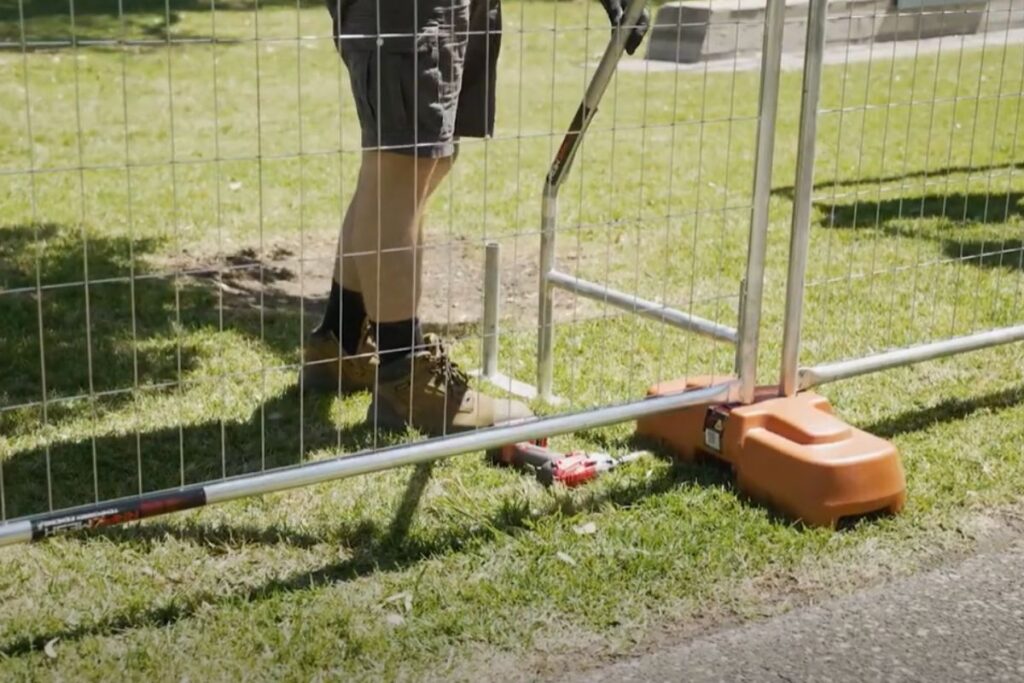
Why choose temporary fencing for tree protection?
Temporary fencing is the most practical and budget-friendly way to establish a TPZ. It offers several advantages over permanent barriers:
- Quick to install and remove after construction.
- Complies with council standards, including signage and visibility.
- Durable enough to handle harsh site conditions.
- Adaptable to suit different tree sizes and development sites.
- Cost-effective, since panels can be reused for other applications, such as securing site perimeters or creating safe walkways.
Australian Standards and Council regulations
Tree protection zones are governed by strict regulations. The main guideline is the Australian Standard AS 4970-2009 Protection of trees on development sites, which was recently updated in 2025 to reflect best practices in tree management. This standard outlines how TPZs should be calculated, fenced, and managed throughout construction projects.
Local councils also impose specific requirements. For example, many councils in Western Australia require TPZs around verge trees to be at least 2.4m x 2.4m. Some councils may also require signage that identifies the fenced area as a tree protection zone.
Because regulations can vary between regions, builders should always confirm requirements with their local council before beginning work.
How to calculate tree protection zones
Calculating a TPZ uses a simple formula that depends on the tree’s trunk diameter measured at a standard height, known as Diameter at Standard Height (DSH), which is taken at 1.4 metres above ground.
Steps to calculate:
- Measure the circumference of the trunk 1.4 metres above ground (DSH).
- Calculate the diameter by dividing the circumference by Pi (3.14).
- Multiply the diameter by 12 to calculate the TPZ radius.

Example:
- Circumference = 94 cm
- Diameter = 94 ÷ 3.14 = 30 cm
- TPZ radius = 30 × 12 = 360 cm (3.6 metres)
Note: Some councils impose minimum or maximum TPZ sizes regardless of calculation.
Tree protection with TTFS
Tree protection zones are vital for preserving established trees during construction. By creating a fenced-off area that restricts access, builders can protect trunks, tree roots, and canopies from damage. More importantly, they can comply with Australian Standards and council requirements, avoiding fines and ensuring smoother project progress.
Fencing is the most reliable way to enforce a TPZ, and TTFS temporary fencing offers the ideal balance of strength, flexibility, and cost-effectiveness. With easy installation and compliance with council and national standards, it is the go-to solution for Australian development sites.
If you are preparing for a construction project, explore our range of temporary fencing to establish your tree protection zones effectively and responsibly.
Contact our experienced team today by calling 1300 119 998 or completing an enquiry form.