


If you’ve ever planted a flower bed, landscaped your yard, or just wanted a tidier outdoor space, you’ve probably asked: What are the best types of garden borders?
Garden edging and borders do more than look good. It gives your outdoor space identity, protects plants, and makes maintenance easier.
What are garden borders?
Garden borders are physical edges that separate one part of your yard from another. They can frame flower beds, line pathways, or act as decorative garden fencing.
The best garden border is both practical and stylish. It should hold back mulch, keep grass out, and complement your outdoor space.
Garden borders vs garden edging
Garden borders
Taller, more visible structures. These include garden border fences or a picket fence for decoration and protection.
Garden edging
These are low strips that sit at ground level. They create clean lines between grass, mulch, gravel, or garden beds.
Garden edging gives you neat separation. Borders add definition and sometimes act as barriers. Used together, they make your garden both secure and stylish.
Best garden edging ideas
There’s no one-size-fits-all choice. The right option depends on your style, space, and landscaping budget.

Stone garden edging
Stone is one of the most durable and traditional edging materials. Natural rocks create a rustic look, while cut stone adds a more formal style. It works particularly well for flower bed borders where you want strength and permanence; however, it does require effort to install due to its weight.
- Best for: rustic landscaping, flower bed borders
- Pros: highly durable, classic look
- Cons: heavy, takes effort to install

Brick garden edging
Bricks are a simple, affordable, and timeless option for garden borders. They can be laid flat for a wide edge or upright for added height, giving you flexibility depending on your design. Brick edging suits lawns and paths, though it may shift over time without a solid base.
- Best for: lawns, paths, and formal gardens
- Pros: affordable, easy to source
- Cons: may shift without a solid base

Metal garden edging
Metal strips are slim and modern, creating sharp, clean lines that almost disappear into the soil. They’re perfect for landscaping in minimalist gardens and can handle curves or straight edges with ease. While long-lasting, they can be more expensive than other options and may require cutting tools for installation.
- Best for: sleek landscape edging
- Pros: sharp lines, long-lasting
- Cons: can be more expensive
Plastic or rolled garden edging
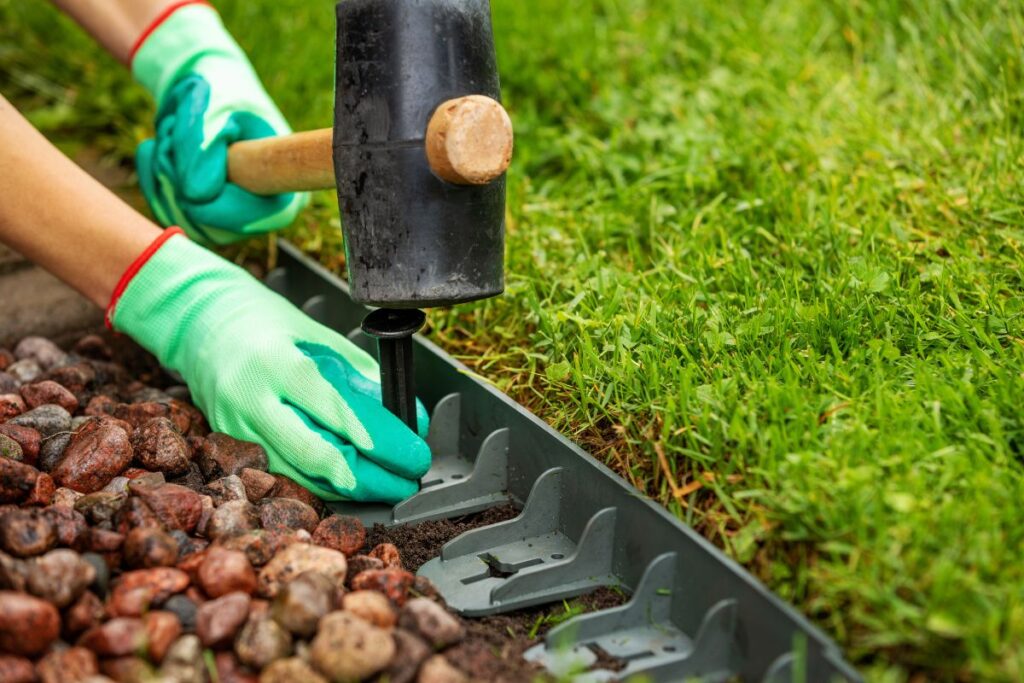
Plastic garden edging, often sold in rolls, is flexible and lightweight. It’s one of the most popular and affordable garden edging ideas, working particularly well for curved shapes or irregular garden beds. Installation is quick, making it a favourite for DIY fence projects, but it won’t last as long as stone or metal.
- Best for: cheap garden edging ideas, curved borders
- Pros: budget-friendly, easy DIY
- Cons: less durable, can crack

Decorative garden fence
A decorative garden fence adds both style and function. Options like white PVC picket fencing bring charm to cottage gardens or smaller spaces, while also stopping pets or children from entering flower beds. Although not as sturdy as stone or metal, it’s one of the more attractive choices.
- Best for: cottage gardens, small spaces
- Pros: charming, doubles as a barrier
- Cons: less sturdy than stone or metal

Temporary fencing
Temporary fencing is predominantly used for worksites or events. However, it can double as strong and flexible garden fencing, particularly for protecting large garden beds or sectioning off areas of your yard. TTFS panels are quick to install, reusable, and sturdy enough to keep pets or children out of your garden.
- Best for: large outdoor spaces, temporary or flexible garden layouts.
- Pros: durable, reusable, easy to move and reconfigure.
- Cons: more visible and bulkier than standard garden edging.
Benefits of garden edging
A well-installed border makes your garden easier to manage and more enjoyable to use.
- Protects plants from grass, weeds, and pets.
- Keeps soil and mulch in place after rain or wind.
- Frames your garden beds to highlight flowers and pathways.
- Reduces maintenance time by creating neat mowing and trimming lines.
Borders and edging are small landscaping changes that make a big impact.
What to look for in garden edging
Before choosing a material, think about your needs:
- Durability: Will it handle your climate?
- Style: Rustic, modern, or classic?
- Budget: Are you after low-cost edging or premium finishes?
- Function: Decorative, protective, or both?
- Ease of installation: Do you want a quick DIY solution or a more permanent project?
How to install garden edging
Most edging projects are simple enough to do yourself. Here’s how:
- Plan the line: Mark it out with string or spray paint.
- Dig a trench: That is wide and deep enough for your edging.
- Lay the border: Place stone, brick, or rolled edging firmly in place.
- Secure it: Tap it in and check alignment.
- Backfill soil or gravel: Hold the edging in place.
- Compact the soil: Ensure it stays stable.
If you’re wondering how to install garden edging for curves, flexible roll edging is the easiest choice.
Best garden borders for typical garden uses
Different projects call for different solutions:
- Flower bed borders: Stone, brick, or picket fences highlight plants and add structure to the garden.
- Vegetable gardens: Timber sleepers or raised edging keep soil secure.
- Pathways and lawns: Metal or brick edging gives crisp, low lines.
- Cheap garden edging ideas: Plastic rolls, gravel strips, or recycled timber.
- Decorative focus: White picket fence garden borders for instant charm.
Do you need garden borders or temporary fencing?
As Australia’s leading supplier of temporary fencing for sale, TTFS has a wide range of durable and reliable solutions to suit your property. From temporary fencing panels that can double as strong garden borders to site safety products built for long-term use, you’ll find everything you need with us.
Speak to our experienced team today on 1300 119 998 or send an enquiry online, and we’ll help you choose the right fencing solution for your project.